How Retirees Can Change Climates Without Leaving Chile
Chile’s length lets retirees move drier, greener, warmer, or cooler later without a second immigration project. Here is how the climates actually differ.
ImmiPulse | Aug 5, 2026
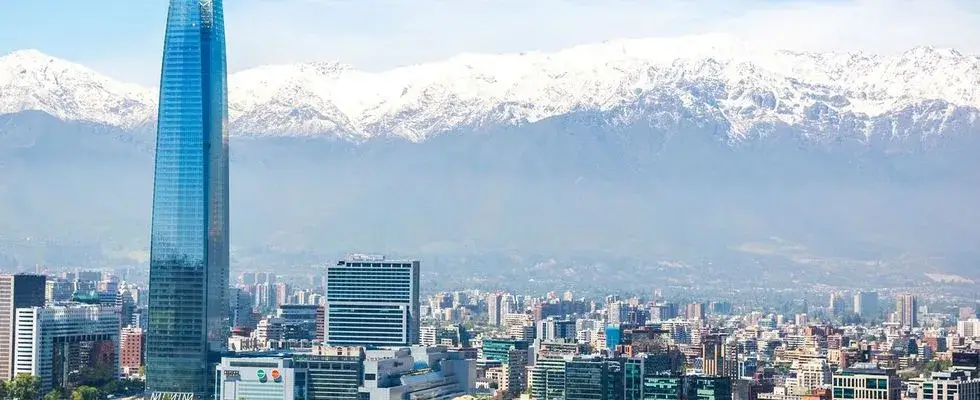
What happens if you choose the wrong climate after moving abroad? In Chile, you can move somewhere warmer, cooler, drier, or greener without starting a second immigration process.
Why? Chile’s continental territory is about 2,650 miles long (4,270 km), according to the Chilean government. It includes deserts, Mediterranean valleys, rainy temperate forests, lakes, alpine zones, and Patagonian conditions under one immigration system. Portugal, Mexico, Panama, and most US states generally keep you within one climate band.
This does not make Chile better for everyone. The question is whether having this choice matters to you.
Why climate mistakes are expensive abroad
A retiree who picks the wrong US city can drive to another state. A retiree who picks the wrong country often faces a new visa file, new tax residence questions, new banks, and another round of housing search under foreign rules.
Climate is one of the easiest variables to misjudge from a winter visit or a summer vacation. Heat tolerance changes. Joints react to damp winters. Smoke season, winter air quality, and constant rain look different after twelve months than after twelve days.
Chile does not remove those risks. It reduces the cost of correcting them, because the immigration status that got you into the country usually stays valid if you later move from the coast to the lakes, or from Santiago to the drier north.
Moving from Viña del Mar to Puerto Varas, or from Santiago to La Serena, is normally a domestic address change under the same Chilean residence permit. It is not a new immigration case. Housing, healthcare access, and daily Spanish still change with the city.
What this means in practice
Chile does not have five neat climate zones. Official descriptions and tourism climate guides show a gradual change from the arid north to the Mediterranean center, rainy south, and colder far south. Altitude and distance from the Pacific also create strong local differences.
For a retiree, the useful version is simpler. You can usually find a city that is:
- drier than where you are now
- greener and wetter than where you are now
- milder in winter than inland Santiago
- colder and more remote, if that is the point
You can make that move while keeping your Chilean residency, banking, and national healthcare system.
Northern coast: dry air, cool Pacific, thin services outside hubs
La Serena sits on the semi-arid northern coast. Japan Meteorological Agency climate normals for La Serena show mean monthly temperatures roughly between 51°F and 63°F (11-17°C), with annual precipitation near 3 inches (about 80 mm). Most of that rain falls in a short winter window.
That profile suits retirees who want dry air, limited heating demand, and fewer gray months. It is not Caribbean heat. The Pacific keeps summers moderate, and marine cloud is common.
The trade-off is services. Specialist healthcare, international flights, and deep private-clinic networks thin out as you leave the Santiago-Valparaíso axis. La Serena works for many daily needs. Complex care still often means travel toward the capital. For a city-level read, see Expat.cl’s guide to where to live in Chile.
Central coast and Santiago: where many foreigners start
The central belt is where most foreigners start. The Chilean government describes the stretch from Coquimbo to Biobío as Mediterranean: dry summers, cooler wetter winters, and clear seasons.
Santiago’s Quinta Normal station normals show summer means near 68-71°F (20-22°C) and winter means near 46-48°F (8-9°C), with annual precipitation around 13 inches (about 340 mm) concentrated in the cool months. The coast around Viña del Mar and Concón sits in the same broad zone, but the ocean softens summer heat and winter cold compared with the inland basin.
That is why the central coast is a common first stop for US retirees. Santiago remains close enough for major airports and specialist care. The coast offers a smaller-city pace without abandoning the country’s main service hub.
It is also where climate comfort can fail in winter for the wrong neighborhood. Santiago’s Metropolitan Region runs a formal Critical Episode Management season each year from May 1 to August 31 because fine-particle pollution rises in cold months. In the 2025 winter season, authorities recorded 23 PM2.5 critical-episode days (20 alerts and 3 pre-emergencies). The coast is not immune to gray damp winters, but it is a different air and temperature experience from a basin neighborhood on a stagnant July morning.
If winter air quality is a health issue for you, do not treat “Santiago” as one climate. Basin neighborhoods and the cold months are the stress test. Many retirees who want central-Chile services still prefer the Viña del Mar or Concón coast for daily air and milder temperatures, then go into Santiago for specialists and flights.
Lake district and rainforest belt: green, cool, and wet on purpose
South of the Mediterranean belt, the climate flips. Valdivia’s normals show mean monthly temperatures from about 45°F in July to 61°F in January (7-16°C), with annual precipitation around 65 inches (about 1,640 mm). Nearby Puerto Montt, the airport city for Puerto Varas, records roughly 60 inches a year (about 1,530 mm) and cool year-round means near 43-58°F (6-15°C).
This area may suit you if you want forests, lakes, volcano views, and a slower pace. It is a poor choice if your main goal is to escape gray weather. Summers are mild rather than hot, and rain is common. You will need to think about heating, waterproof clothing, mold control, and what you will do indoors.
Puerto Varas often attracts foreigners who visited in high summer. A full local winter is the real test. Healthcare depth and flight frequency are better than in deep Patagonia, but they are not Santiago.
Patagonia and alpine areas: colder and more remote
Coyhaique’s normals average about 47°F (8°C) across the year, with July near 36°F (2°C) and January near 57°F (14°C). Annual precipitation is around 39 inches (about 1,000 mm). Winters are real. Wind, frost, and isolation are part of daily planning.
Further south and higher up, conditions get colder and more remote. These places belong on a shortlist only if the landscape is the point. They are a weak answer to “I want an easy retirement town with dense private medicine next door.”
The mobility advantage still applies. A couple can try the lakes for two years, decide the rain is too much, and move to La Serena or Concón without rebuilding an immigration case from zero. That is harder to do if the first bet was a different country.
Domestic distances still count
Moving within Chile is simpler than immigrating again, but long domestic distances still add time and cost.
Chile’s domestic network links the extremes through airports in a matter of hours, and Santiago is the main hub. Official tourism guidance lists LATAM, SKY, and JetSMART as the major airlines and treats flying as the practical way to cover long north-south jumps. Buses cover many routes at lower cost and much higher time cost.
For a retiree, that means:
- A coastal-central base keeps specialist care and international flights closest.
- A southern or far-northern base adds flight planning to medical appointments, family visits, and supply runs.
- Moving later is legally simpler than emigrating again, but packing up a household is still a household move.
Spanish also matters more outside the larger expat pockets. Climate variety does not create an English-speaking bubble in every valley.
When Chile may not suit you
Chile may not suit you if you need:
- same-day proximity to US grandchildren by car or a short hop
- a large ready-made English-speaking retirement colony
- the lowest possible rent in Latin America
- Caribbean water and true tropical heat
- guaranteed top-tier hospital access without ever leaving a small town
Chile may suit you if you are willing to learn Spanish, accept Pacific rather than Caribbean coasts, and deal with long distances inside the country. In return, you can choose between very different climates without changing your residency.
What to check before you pick a first city
Treat your first city as a place to test, not a permanent commitment.
- Visit in the season you fear. If you hate cold damp, see the south in winter. If you hate dry heat and dust, test the north in summer.
- Map healthcare, not just cafes. Ask which specialists exist locally and how often you would fly to Santiago.
- Price heating, not only rent. Green southern towns can look cheaper until winter energy and moisture control show up.
- Check air and access on bad days. In Santiago, review winter air-quality patterns by sector. On the coast, check hills, walkability, and humidity. In the south, check flight cancellations and road conditions.
- Keep the first lease flexible. Rent for a year so you can see what daily life is like before you settle permanently. Expat.cl’s US retiree guide explains the wider move beyond climate alone.
Book the scouting trip for the season you are most likely to dislike. A sunny January week in Puerto Varas or a clear autumn day in Santiago will not answer the question. July and August will.
Find the part of Chile that fits
Chile is too long and varied for “Would I like the country?” to be a useful question. The practical question is which part of it fits the life you want. The 3-minute city-match quiz compares climate, city size, healthcare access, and pace of life.